|
- Brand:MAINTAIN
- Model:1G,10G,1KG,5KG,25KG
- Purity:98%
- Cas:20111-18-6
- Createtime: 2026-07-02
- Updatetime: 2026-07-16
| useage | FOR R&D RESEARCH USE |
| deliveryInfo | |
| appearance | white to off white powder |
| aliasen | |
| supplyCapacity | 5000000MG/Year |
| harbor | SHENZHEN |
| minorder | 10KG |
1. Core Product Specifications
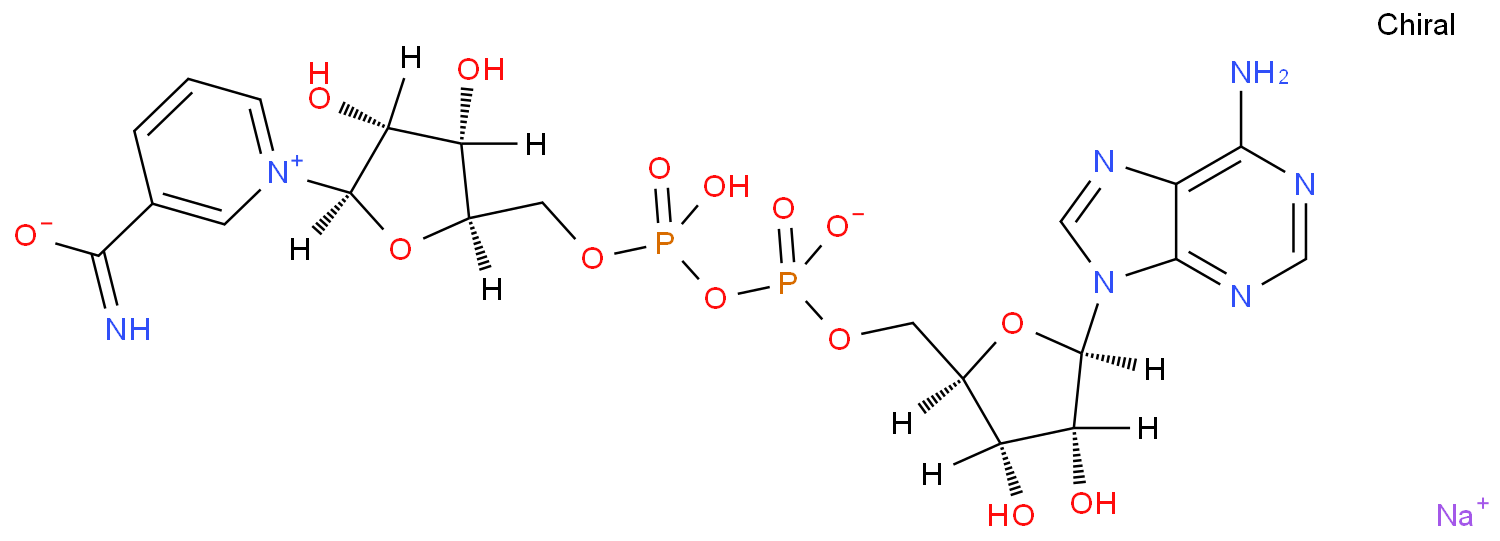
Product Name: β-Nicotinamide Adenine Dinucleotide Sodium Salt
Abbreviation: NAD+ Sodium Salt, Oxidized Coenzyme I Sodium Salt
CAS No.: 20111-18-6
Molecular Formula: C??H??N?NaO??P?
Molecular Weight: 685.41
Appearance: White or off-white crystalline lyophilized powder, odorless, free of caking and impurities
Purity: ≥99.0% (Tested by HPLC)
Moisture: ≤3.0%
Heavy Metals: ≤10ppm
Endotoxin: ≤0.1EU/mg
Solubility: Freely soluble in pure water and physiological buffer solutions, fast dissolution rate, slightly soluble in ethanol, insoluble in conventional organic solvents
Storage Condition: Store at 2-8℃ in sealed, dry and dark environment; avoid high temperature, humidity and prolonged air exposure
Production Technology: Enzymatic catalytic synthesis, directional sodium salt formation, multi-stage high-precision chromatographic purification, low-temperature vacuum lyophilization
Product State: Stable oxidized sodium salt active structure, optimized based on natural NAD+
Shelf Life: 24 months under standard sealed and low-temperature storage conditions
2. Professional Product Introduction
β-Nicotinamide Adenine Dinucleotide Sodium Salt (CAS: 20111-18-6) is a high-stability sodium salt modified derivative of conventional oxidized NAD+, retaining the complete biological activity of natural cellular core coenzyme. As an essential cofactor for hundreds of cellular dehydrogenases, it dominates the redox reaction system of living organisms, fully participating in carbohydrate, lipid and protein metabolism, mitochondrial ATP energy production, Sirtuins longevity protein activation, DNA damage repair and cellular anti-oxidation balance regulation. Compared with free-state NAD+, sodium salt molecular modification effectively optimizes molecular stability, solves the problems of easy oxidation and rapid aqueous degradation of ordinary NAD+, and significantly improves water solubility, solution stability and biocompatibility. Adopting eco-friendly bionic enzymatic synthesis and multi-stage purification technology, the product features ultra-low impurity content and stable batch quality, widely used in molecular biology research, cell culture, metabolic mechanism analysis, anti-aging raw material formulation and biomedical intermediate manufacturing.
3. Core Product Advantages
1. Optimized Sodium Salt Structural Stability
Modified by sodium salt coordination, the molecular structure is more compact and stable than free NAD+. It effectively resists air oxidation and aqueous solution degradation, maintains stable activity during storage, transportation and formula preparation, and solves the pain point of easy inactivation of ordinary NAD+, with far superior batch stability and repeatability.
2. Superior Solubility & Higher Bioavailability
The sodium salt modification greatly enhances water solubility and solution stability, achieving rapid and uniform dissolution with clear and transparent solution. It possesses excellent cell permeability and biocompatibility, requiring no in-vivo secondary conversion. It directly participates in cellular energy metabolism and DNA repair pathways, delivering faster action and higher utilization efficiency than common NAD+ precursors and free NAD+.
3. Ultra-High Purity & Strict Compliance
Produced by advanced enzymatic synthesis and multi-stage chromatographic purification, the product reaches ≥99% high purity with strictly controlled heavy metals, endotoxin and harmful residues. It meets the high standards of scientific research experiments, cell culture, pharmaceutical intermediates and high-end health raw materials, and can provide complete COA, MSDS and other export compliance documents.
4. Reliable Experimental Repeatability & Wide Research Adaptability
Stable sodium salt structure avoids coenzyme activity loss during in-vitro experiments, ensuring accurate data and excellent experimental repeatability. It is the preferred upgraded raw material for mitochondrial metabolism, cell senescence, enzyme activity detection and biomedical mechanism research.