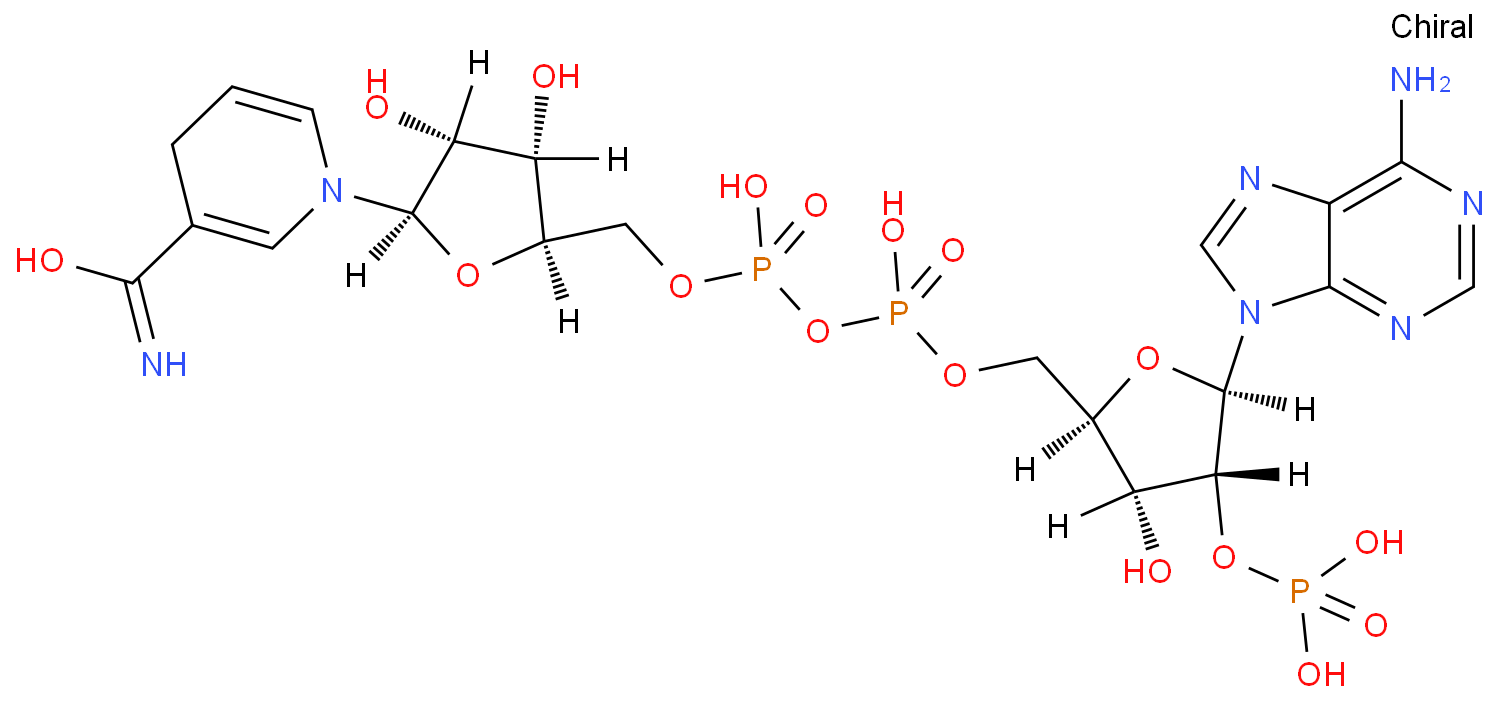
β-Nicotinamide adenine dinucleotide phosphate Reduced form
- Model:1G,10G,1KG,5KG,25KG
- Createtime: 2026-07-02
- Updatetime: 2026-07-16
Product Details
| useage |
FOR R&D RESEARCH USE
|
| deliveryInfo |
|
| appearance |
white to off white powder
|
| aliasen |
|
| supplyCapacity |
50Tons/Year
|
| harbor |
SHENZHEN
|
| minorder |
1g
|
β-NADPH (Free Acid) CAS 53-57-6 Full English Technical Datasheet
Important Distinction
-
CAS 53-57-6: β-Nicotinamide Adenine Dinucleotide Phosphate Reduced (free acid, NADPH base)
-
CAS 2646-71-1: NADPH Tetrasodium Salt (water-soluble sodium salt form, mainstream reagent grade)
-
CAS 53-57-6 Nicotinamide = Niacinamide (Vitamin B3) is a different compound, do not confuse.
1. Basic Chemical Information
-
CAS No.: 53-57-6PubChem
-
Full Name: β-Nicotinamide Adenine Dinucleotide Phosphate, Reduced Form
-
Abbreviation: β-NADPH / TPNH / Reduced Coenzyme II
-
Synonyms: Dihydronicotinamide Adenine Dinucleotide Phosphate, Triphosphopyridine Nucleotide Reduced
-
IUPAC Name: [(2R,3S,4R,5R)-5-(6-amino-9H-purin-9-yl)-3,4-dihydroxyoxolan-2-yl]methyl ({[(2R,3S,4S)-5-(3-carbamoyl-1,4-dihydropyridin-1-yl)-2,3,4-trihydroxypentyl]phosphonato}oxy)phosphoric acid
-
Molecular Formula: C??H??N?O??P?PubChem
-
Molecular Weight: 745.42 g/mol
-
EINECS: 200-177-6
-
PubChem CID: 5884
2. Physical & Chemical Properties
|
Test Item
|
Standard Specification
|
|
Appearance
|
White to pale light yellow crystalline solid powder
|
|
Odor
|
Odorless
|
|
Solubility
|
Slightly soluble in neutral water; freely soluble in weak alkaline aqueous buffer; soluble in DMSO; insoluble in ethanol, acetone, oils
|
|
UV Characteristic Absorption
|
λmax 260 nm & 340 nm; Molar extinction coefficient ε??? = 6220 (pH 8.0–10.0)
|
|
A???/A??? Ratio
|
2.20 ~ 2.45
|
|
pH (saturated aqueous suspension)
|
3.0 ~ 4.5 (free acid, weak acidity)
|
|
Stability
|
Extremely light-sensitive; rapidly degraded under acidic, high temperature, UV irradiation; stable under dark, alkaline, low-temperature sealed storage
|
|
Hygroscopicity
|
Highly hygroscopic, must be stored in vacuum moisture-proof packaging
|
3. Quality Specifications (Biochemical Research Grade)
|
QC Item
|
Standard Limit
|
Test Method
|
|
Assay (HPLC, anhydrous basis)
|
≥97.0%; Premium ≥99.0%
|
RP-HPLC UV 340 nm
|
|
Loss on Drying (KF)
|
≤7.0%
|
Karl Fischer Titration
|
|
Oxidized Impurity NADP?
|
≤2.0%
|
HPLC
|
|
Single Unknown Related Impurity
|
≤0.40%
|
HPLC
|
|
Total Related Impurities
|
≤1.20%
|
HPLC
|
|
Enzymatic Activity Verification
|
Pass glutathione reductase activity test
|
UV Spectrophotometry
|
Heavy Metals
|
Heavy Metal
|
Limit
|
|
Lead (Pb)
|
≤0.5 ppm
|
|
Arsenic (As)
|
≤1.0 ppm
|
|
Cadmium (Cd)
|
≤0.1 ppm
|
|
Mercury (Hg)
|
≤0.1 ppm
|
Microbial Index
|
Microbe Item
|
Standard
|
|
Total Aerobic Microbial Count
|
≤500 CFU/g
|
|
Yeast & Mold
|
≤50 CFU/g
|
|
Pathogens (E. coli, Salmonella, S. aureus)
|
Negative per 25g
|
4. Core Biochemical Mechanism & Biological Functions
-
Primary Cellular Reducing Equivalent Cofactor
The core hydrogen donor for all anabolic biosynthesis; generated via pentose phosphate pathway, delivers hydride ions for synthetic metabolism.
-
Biosynthesis Cofactor
Indispensable substrate for lipid, cholesterol, fatty acid, steroid, nucleic acid and amino acid synthesis; supports cytochrome P450 drug hydroxylation.
-
Intracellular Antioxidant Defense Core
Regenerates reduced glutathione (GSH) via glutathione reductase; eliminates ROS free radicals, inhibits lipid peroxidation and oxidative cell damage.
-
Immune Respiratory Burst Medium
Provides electrons for NADPH oxidase in macrophages to produce reactive oxygen species for pathogen clearance.
-
Universal Enzymatic Assay Marker
340 nm absorbance signal is standard detection readout for dehydrogenases, reductases, NOS, liver function & clinical diagnostic kits.
5. Application Fields & Usage Tips
5.1 Biochemical Laboratory Research
-
Enzyme kinetics, redox metabolism pathway, pentose phosphate pathway research
-
Cell culture medium additive, biosensor raw material, in-vitro metabolic simulation
5.2 Clinical Diagnostic Reagent Raw Material
-
Detection kits for glucose-6-phosphate dehydrogenase, glutathione reductase, blood lipid, liver antioxidant indicators
-
Formula Tip: Prepare working solution with pH 8.0–10.0 alkaline buffer to improve solubility & stability
5.3 Pharmaceutical R&D Intermediate
-
Anti-oxidation, mitochondrial protection new drug cell experimental raw material
5.4 High-End Cosmetic Raw Material
Anti-photoaging, energy replenishing antioxidant essence; recommended addition: 0.005%–0.02%; formula pH must be adjusted above 7.5 with alkaline solubilizer
6. Safety Profile
-
Irritant to skin, eyes and respiratory tract upon direct contact (GHS Xi hazard)
-
No cytotoxicity under standard in-vitro biochemical working concentration
-
Not for direct oral administration; lab operation requires gloves, goggles and dust mask
-
Non-sensitizing, non-phototoxic at low cosmetic dosage
7. Storage & Packaging
-
Storage Condition: Hermetic vacuum foil sealed; long-term storage at -20°C, absolute light-proof & moisture-proof; avoid repeated freeze-thaw cycles; short-term storage ≤4°C
-
Shelf Life: 24 months under intact original vacuum packaging
-
Packaging: 100mg/500mg/1g/5g aluminum vacuum foil bags for lab research; 25kg double PE inner bag + paper drum for bulk factory order