Deazaflavin
- Model:1G,10G,1KG,5KG,25KG
- Createtime: 2026-07-02
- Updatetime: 2026-07-16
Product Details
| useage |
FOR R&D RESEARCH USE
|
| deliveryInfo |
|
| appearance |
white to off white powder
|
| aliasen |
|
| supplyCapacity |
50Tons/Year
|
| harbor |
SHENZHEN
|
| minorder |
10g
|
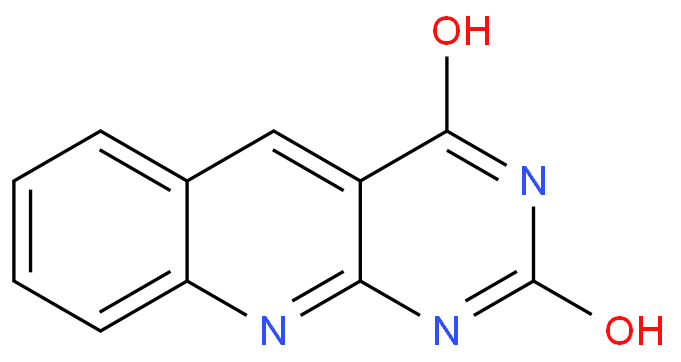
5-Deazaflavin CAS 26908-38-3 Full English Technical Datasheet
1. Basic Chemical Information
-
CAS No.: 26908-38-3
-
Standard Name: 5-Deazaflavin
-
IUPAC Name: Pyrimido[4,5-b]quinoline-2,4(1H,3H)-dione
-
Synonyms: Deazaflavin
-
Molecular Formula: C??H?N?O?
-
Molecular Weight: 213.19 g/mol
-
MDL Number: MFCD24549434
-
Core Feature: Flavin analog (vitamin B2 derivative), nitrogen at position 5 replaced by carbon, strong redox coenzyme activity
2. Physical & Chemical Properties
|
Test Item
|
Standard Specification
|
|
Appearance
|
White to off-white crystalline powder
|
|
Odor
|
Odorless
|
|
Solubility
|
Soluble in DMSO, methanol, ethanol, pyridine; slightly soluble in hot water; insoluble in alkanes, vegetable oils
|
|
UV Absorption Peak
|
260 nm, 330 nm, 405 nm
|
|
Melting Point
|
>320 °C (decompose)
|
|
Stability
|
Stable under sealed cool dark environment; sensitive to strong UV light, high temperature, strong oxidants
|
|
Hygroscopicity
|
Slightly hygroscopic, avoid long-term exposure to air moisture
|
3. Quality Specifications (Cosmetic / Supplement / Biochemical Grade)
|
QC Item
|
Standard Limit
|
Test Method
|
|
Assay (HPLC)
|
≥98.0%; Premium ≥99.0%
|
RP-HPLC UV 330 nm
|
|
Loss on Drying
|
≤0.50%
|
Karl Fischer Titration
|
|
Residue on Ignition
|
≤0.10%
|
Gravimetry
|
|
Single Unknown Impurity
|
≤0.30%
|
HPLC
|
|
Total Related Impurities
|
≤1.00%
|
HPLC
|
Heavy Metals
|
Heavy Metal
|
Limit
|
|
Lead (Pb)
|
≤0.5 ppm
|
|
Arsenic (As)
|
≤1.0 ppm
|
|
Cadmium (Cd)
|
≤0.1 ppm
|
|
Mercury (Hg)
|
≤0.1 ppm
|
Microbial Limits
|
Microbe Index
|
Standard
|
|
Total Aerobic Microbial Count
|
≤500 CFU/g
|
|
Yeast & Mold
|
≤50 CFU/g
|
|
E. coli, Salmonella, S. aureus
|
Negative per 25g
|
4. Biological Mechanism & Core Efficacy
-
High-Efficiency Mitochondrial Energy Coenzyme
Possesses stronger electron transfer capacity than NMN, FAD, riboflavin; directly participates in mitochondrial electron transport chain, significantly boosts ATP synthesis, improves cellular energy supply, relieves cell aging fatigue.
-
Powerful Antioxidant & Anti-Inflammatory
Eliminates intracellular ROS free radicals, inhibits lipid peroxidation, blocks NF-κB inflammatory pathway, alleviates chronic low-grade inflammation and UV oxidative damage.
-
Anti-Aging & Skin Rejuvenation
Activates fibroblast proliferation, promotes collagen & elastin secretion, repairs photoaged skin barrier, fades dullness and fine lines, brightens sallow complexion.
-
Autophagy & Cell Renewal Promotion
Induces mild autophagy to clear damaged organelles and lipofuscin, delays cellular senescence, enhances skin cell self-repair ability.
-
Biological Redox Photocatalyst
Classic research model compound for flavin enzyme mechanism, widely used in biosensor, enzyme activity assay and redox pathway research.
5. Application Fields & Recommended Dosage
5.1 Oral Dietary Supplement
-
Anti-aging anti-fatigue capsules, mitochondrial energy tablets, immunity-support formulations
-
Daily oral dosage: 5–30 mg/day
-
Advantage: Higher energy-promoting efficiency than ordinary riboflavin derivatives
5.2 Cosmetic & Personal Care
-
Anti-aging serum, anti-wrinkle cream, brightening essence, post-sun repair gel, energy-replenishing eye care
-
Recommended addition dosage: 0.002% ~ 0.03% (w/w)
-
Formula Tip: Match with solubilizer for aqueous formulas; avoid long-term UV exposure after preparation
5.3 Biochemical Lab Reagent & Research Raw Material
-
Flavin enzyme research substrate, redox reaction photocatalyst, cell culture medium additive, biosensor raw material
5.4 Pharmaceutical Intermediate
Raw material for anti-oxidation, mitochondrial protective new drug development
6. Safety Profile
-
Low acute toxicity, non-sensitizing, non-phototoxic at standard usage concentration
-
Mild skin irritation only at ultra-high concentration (>0.5%)
-
Good biocompatibility, no cytotoxicity in cosmetic & oral working dosage
-
No severe adverse reactions recorded in long-term cell & animal trials