Product
|
L-Glutathione Reduced
- Brand:NO
- Model:1G,10G,1KG,5KG,25KG
- Purity:98%
- Cas:70-18-8
- Createtime: 2026-07-02
- Updatetime: 2026-07-16
Product Details
| useage | FOR R&D RESEARCH USE |
| deliveryInfo | |
| appearance | white to off white powder |
| aliasen | |
| supplyCapacity | 50Tons/Year |
| harbor | SHENZHEN |
| minorder | 1kg |
1. Basic Chemical Information


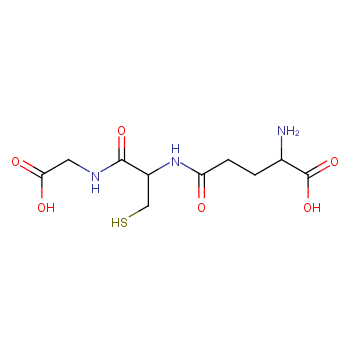
GSH Structural Formula
- CAS No.: 70-18-8
- EC Number: 200-725-4
- MDL Number: MFCD00065939
- IUPAC Name: (2S)-2-amino-5-[[(2R)-1-(carboxymethylamino)-1-oxo-3-sulfanylpropan-2-yl]amino]-5-oxopentanoic acid
- Chemical Name: L-γ-Glutamyl-L-cysteinyl-glycine
- Common Synonyms: Reduced Glutathione, GSH, Triptide, Glutathione-SH
- Molecular Formula: C??H??N?O?S
- Molecular Weight: 307.32 g/mol
- Chemical Structure: Natural tripeptide composed of Glutamic acid, Cysteine, Glycine
2. Physical & Chemical Properties
| Test Item | Standard Specification |
|---|---|
| Appearance | White to off-white crystalline powder |
| Odor | Almost odorless |
| Solubility | Freely soluble in water; slightly soluble in ethanol; insoluble in ether, acetone |
| pH (10 g/L aqueous solution, 20℃) | 2.8 ~ 3.5 |
| Optical Rotation [α]?2? | -15.0° ~ -17.5° (c=2, water) |
| Melting Point | 185–195 °C (decomposes) |
| Hygroscopicity | Strongly hygroscopic, avoid moisture exposure |
3. Quality Standard (USP / EP / Food Grade)
| QC Item | Limit Standard | Test Method |
|---|---|---|
| Assay (Iodine Titration / HPLC) | 98.0% ~ 101.0% (on dried basis) | USP 43 |
| Loss on Drying | ≤0.50% (105℃, 3h) | Gravimetry |
| Residue on Ignition | ≤0.10% | Gravimetry |
| Oxidized Glutathione (GSSG) | ≤1.5% | HPLC |
| Total Related Impurities | ≤2.0% | HPLC |
| Chloride (Cl?) | ≤200 ppm | Titration |
| Sulfate (SO?2?) | ≤300 ppm | Turbidimetry |
| Heavy Metals (Pb) | ≤10 ppm | AAS |
| Arsenic (As) | ≤2 ppm | Silver Diethyldithiocarbamate |
| Total Aerobic Microbial Count | ≤1000 CFU/g | Microbiological Culture |
| Yeast & Molds | ≤100 CFU/g | Microbiological Culture |
| Pathogens (Salmonella, E.coli) | Negative | Microbiological Culture |
4. Mechanism of Action
- Core intracellular antioxidant, neutralizes reactive oxygen species (ROS), free radicals;
- Regulates cellular detoxification via glutathione S-transferase;
- Inhibits melanin synthesis by blocking tyrosinase activity for skin brightening;
- Supports immune cell proliferation and liver metabolic detoxification.
5. Application Fields & Recommended Dosage
5.1 Cosmetic & Personal Care
- Whitening serum, anti-aging essence, facial mask, body lotion, eye care
- Max addition dosage: 0.05% ~ 0.2% (w/w)
- Function: Antioxidation, brightening, anti-photoaging, soothing sensitive skin
5.2 Health Food & Dietary Supplement
- Anti-aging oral powder, immunity-boosting tablets, liver-protecting formula
- Standard dosage: 50–300 mg daily intake
5.3 Pharmaceutical Raw Material
- Liver disease adjuvant treatment, injection-grade raw material, ophthalmic preparations
- Compliant with USP/EP injectable grade specifications
5.4 Biochemical Reagent
- Cell culture medium, laboratory antioxidant buffer, enzyme assay substrate
6. Safety Profile
- Low skin & ocular irritation at cosmetic usage concentration;
- Non-sensitizing, non-phototoxic;
- No acute oral toxicity in human routine dosage;
- Restricted long-term high-dose oral intake under professional guidance.
7. Storage & Packaging
- Storage Condition: Sealed container, cool & dry environment (≤15℃), away from light & moisture; long-term storage recommended at -20℃ under nitrogen protection
- Shelf Life: 24 months under intact original packaging
- Packaging: 25kg double PE inner bag + paper drum; 1kg/5kg aluminum foil vacuum bags for lab & cosmetic samples
8. Test Method Summary
- Content determination: Iodometric titration or reversed-phase HPLC with UV 210 nm detection;
- Impurity profiling: HPLC external standard method for GSSG and peptide impurities.