Product
|
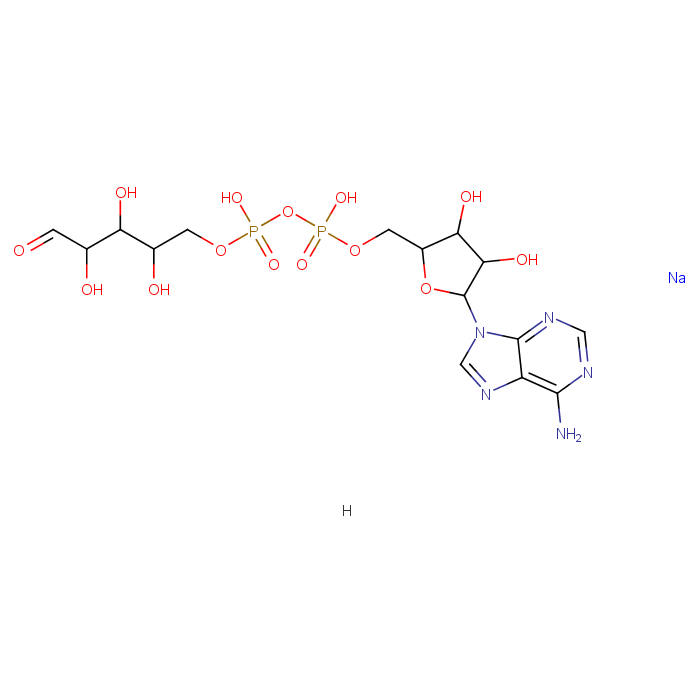
ADENOSINE 5'-DIPHOSPHORIBOSE SODIUM SALT
- Brand:NO
- Model:1G,10G,1KG,5KG,25KG
- Purity:98%
- Cas:68414-18-6
- Createtime: 2026-07-02
- Updatetime: 2026-07-16
Product Details
| useage | FOR R&D RESEARCH USE |
| deliveryInfo | |
| appearance | white to off white powder |
| aliasen | |
| supplyCapacity | 500000KG/Year |
| harbor | SHENZHEN |
| minorder | 1KG |
Professional Product Parameters of CAS 68414-18-6 (ADP-Ribose Sodium Salt)
1. Basic Identification
- CAS No.: 68414-18-6
- Product Name: Adenosine 5'-diphosphoribose sodium salt (ADP-Ribose Na)
- MDL Number: MFCD00136017
- EINECS: 636-188-1
- InChIKey: MBPRZUBFEMLFGQ-UUIVKEFHSA-M
2. Chemical Information
- Molecular Formula: C??H??N?NaO??P? (anhydrous); C??H??N?NaO??P?·2H?O (dihydrate)
- Molecular Weight: 581.30 g/mol (anhydrous); 617.33 g/mol (dihydrate)
- Exact Mass: 581.054 Da
- Calculated LogP: -2.26
- TPSA: 299.00 ?2
- Hydrogen Bond Donors: 8
- Hydrogen Bond Acceptors: 18
- Rotatable Bonds: 12
3. Physical & Chemical Properties
- Appearance: White to off-white or pale yellow crystalline powder, odorless
- Solubility: Freely soluble in water (50–125 mg/mL at 25 °C, clear colorless solution); insoluble in methanol, ethanol, acetone and ether
- pH Value (1% aqueous solution): 6.0–8.0
- Stability: Highly hygroscopic; sensitive to light, heat and oxidation; store under inert nitrogen/argon atmosphere; avoid strong acid and alkali
-
Storage Conditions:
Short-term: 2–8 °C, sealed, dry and light-proofLong-term: -20 °C, anhydrous environment with inert gas protection
- Shelf Life: 24 months under recommended storage
4. Product Specifications (Biochemical / Research Grade)
- Purity: ≥93.0% (standard grade); ≥98.0% (high purity, HPLC)
- Single maximum impurity: ≤1.0%
- Total impurities: ≤2.0%
- Moisture (Karl Fischer): ≤8.0%
- Heavy metals total: ≤20 ppm; Pb ≤2.0 ppm, As ≤1.5 ppm, Cd ≤1.0 ppm
- Endotoxin: ≤5 EU/mg (injectable grade)
- Standard Packing: 10 mg, 50 mg, 100 mg, 500 mg, 1 g, 5 g (aluminum foil bag / vial); 25 kg fiber drum
5. Biological Functions & Applications
- Mechanism: Key metabolite of NAD?; primary endogenous activator of Ca2? permeable TRPM2 ion channels; participates in PARP signaling, DNA repair, autophagy regulation and cell death pathways
-
Main Applications:
- Cell signaling research: TRPM2 channel, calcium signal, PARP pathway, oxidative stress and inflammation models
- Biochemical reagent for NAD? metabolism, ADP-ribosylation modification research
- Drug screening tool for neuroprotection, anti-inflammation and anti-tumor target study
6. Safety & Handling Instructions
- GHS Hazard Class: Irritant (Xi)
- Risk Phrases: R36/37/38 (Irritating to eyes, respiratory system and skin)
- Safety Phrases: S26, S36
- Operation Tips: Avoid inhalation, skin and eye contact; operate in well-ventilated fume hood with safety goggles and gloves
- Waste Disposal: Dispose in accordance with local chemical waste regulations
- Reminder: Only for laboratory biochemical research; human or animal clinical administration is prohibited