Product
|
AOD-9604(GH fragment 176–191)
- Model:1G,10G,1KG,5KG,25KG
- Purity:98%
- Cas:221231-10-3
- Createtime: 2026-07-02
- Updatetime: 2026-07-16
Product Details
| useage | FOR R&D RESEARCH USE |
| deliveryInfo | |
| appearance | white to off white powder |
| aliasen | |
| supplyCapacity | 500000KG/Year |
| harbor | SHENZHEN |
| minorder | 1G |
AOD9604 CAS 221231-10-3 Full English Technical Datasheet
1. Basic Chemical Information
- CAS No.: 221231-10-3
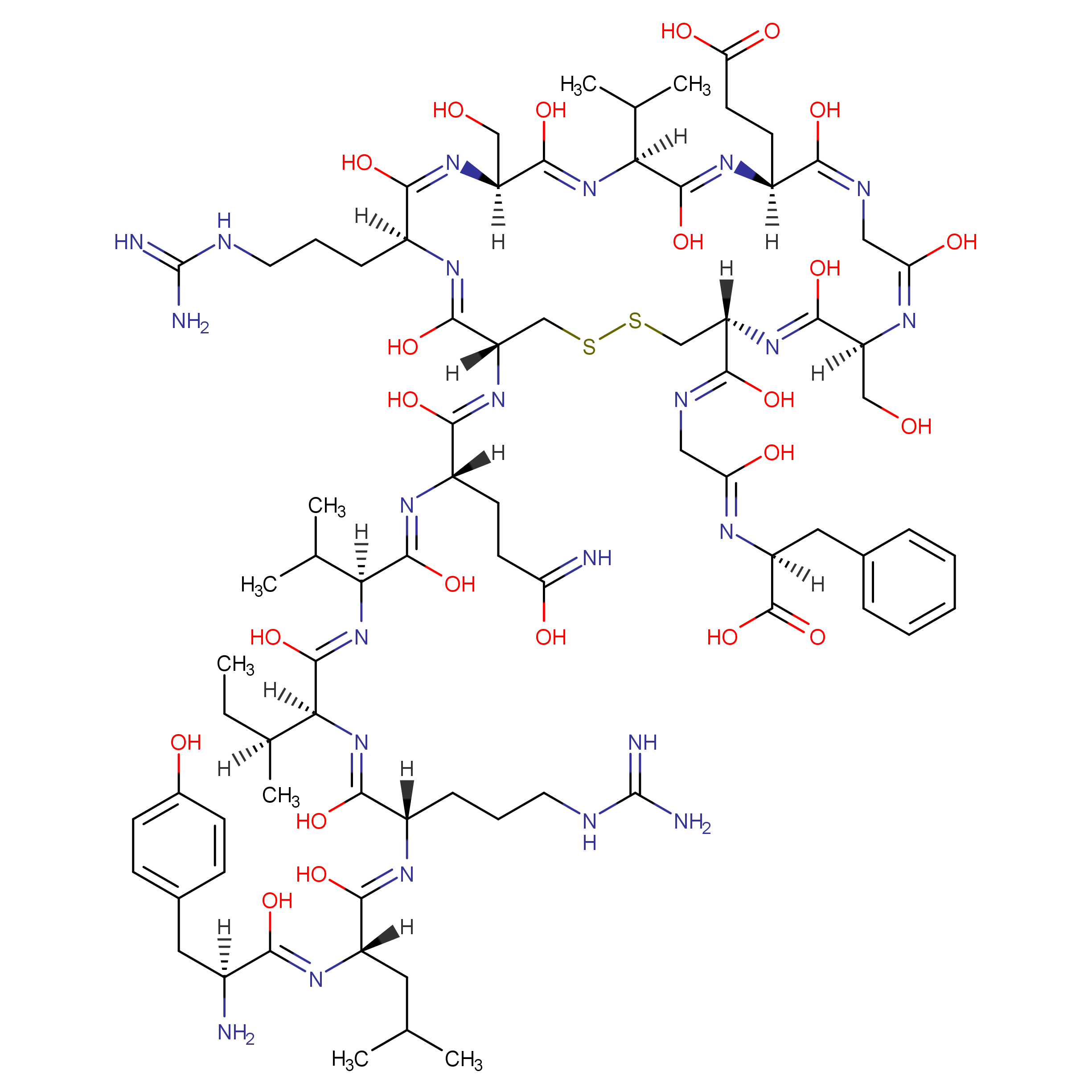
- Full Name: AOD9604; (177–191) Somatostatin Fragment
- Peptide Sequence: H-Tyr-Leu-Arg-Ile-Val-Gln-Cys-Arg-Ser-Val-Glu-Gly-Ser-Cys-Gly-Phe-OH
- Disulfide Bond: Intramolecular Cys7-Cys14 bridge (essential for biological activity)
- IUPAC Name: L-tyrosyl-L-leucyl-L-arginyl-L-isoleucyl-L-valyl-L-glutaminyl-L-cysteinyl-L-arginyl-L-seryl-L-valyl-L-α-glutamyl-glycyl-L-seryl-L-cysteinyl-glycyl-L-phenylalanine
- Synonyms: Anti-obesity research peptide, Lipolytic somatostatin fragment, Fat-loss peptide
- Molecular Formula: C??H???N??O??S?
- Molecular Weight: 1815.10 g/mol
- MDL No.: MFCD18382562
- Core Feature: Synthetic somatostatin fragment, selectively stimulates fat lipolysis without affecting growth hormone secretion; laboratory research-only peptide, not cosmetic/ingestible raw material
2. Physical & Chemical Properties
| Test Item | Standard Specification |
|---|---|
| Appearance | White lyophilized fine crystalline powder |
| Odorless | Odorless |
| Solubility | Freely soluble in bacteriostatic water, neutral PBS buffer; soluble in DMSO; slightly soluble in glycerin; insoluble in mineral oil, ethanol, acetone |
| pH (0.1% aqueous solution) | 5.0 ~ 7.0 |
| Thermal Operation Rule | Prepare stock solution at ≤40℃; sustained heating above 55℃ breaks disulfide bond and loses activity |
| Stability | Stable under vacuum, dark, neutral/weak acidic environment; incompatible with strong alkali, reducing agents, high-concentration oxidants & long-term UV irradiation |
| Hygroscopicity | Moderately hygroscopic; nitrogen-filled vacuum sealed storage mandatory |
| Special Note | Disulfide bond easily cleaved by VC, sulfite, DTT leading to activity loss |
3. Quality Specifications (Biomedical Research Grade)
| QC Item | Standard Limit | Test Method |
|---|---|---|
| Assay (HPLC, anhydrous basis) | ≥98.0%; Premium ≥99.0% | RP-HPLC UV 220 nm |
| Loss on Drying (KF) | ≤0.60% | Karl Fischer Titration |
| Residue on Ignition | ≤0.10% | Gravimetry |
| Single Unknown Related Impurity | ≤0.30% | HPLC |
| Total Related Impurities | ≤1.20% | HPLC |
| Intact Disulfide Cyclization Rate | ≥98% | Ellman Test + HPLC |
| Endotoxin | <10 EU/mg | LAL Test (low endotoxin for cell culture) |
Heavy Metals
Lead (Pb) ≤0.5 ppm; Arsenic (As) ≤1.0 ppm; Cadmium (Cd) ≤0.1 ppm; Mercury (Hg) ≤0.1 ppm
Microbial Limits
Total Aerobic Microbial Count ≤100 CFU/g; Yeast & Mold ≤10 CFU/g; E. coli, Salmonella, S. aureus Negative per 25g
4. Core Biological Mechanism & Research Efficacy
-
Selective Lipolysis Stimulation (Core Research Function)
Mimics somatostatin fragment, activates hormone-sensitive lipase (HSL) in adipocytes, accelerates triglyceride decomposition into free fatty acids and glycerol, promotes fat breakdown; does not interfere with pituitary GH secretion, avoids GH-related side effects (joint swelling, glucose fluctuation).
-
Reduce Adipocyte Differentiation & Fat Storage
Inhibits pre-adipocyte maturation and lipid droplet accumulation, reduces new fat cell formation, prevents visceral fat buildup.
-
Improve Lipid Metabolism & Insulin Sensitivity Auxiliary Effect
Regulates fat metabolism signal pathway, alleviates adipose tissue inflammation, improves peripheral insulin sensitivity in metabolic research models.
-
Muscle Mass Preservation During Fat Loss
Selectively targets adipose tissue lipolysis without catabolizing muscle protein; widely used in body composition & weight management mechanism research.
-
Metabolomics & Obesity Pathway Research Standard Substrate
Internal reference peptide for lipid metabolome tracing, adipocyte cell culture screening for anti-obesity drug candidates.
5. Application Fields & Operation Restrictions
5.1 Biomedical Laboratory Research (Exclusive Permitted Use)
- Adipocyte lipolysis in vitro cell assays, obesity metabolic pathway research
- Lipid metabolomics mass spectrometry tracing, anti-obesity small molecule drug screening
- Typical cell culture working concentration: 10 nM – 1 μM
5.2 Pharmaceutical R&D
Metabolic disorder drug development, adipose tissue inflammation mechanism study
Critical Restriction Statement
Not approved as cosmetic raw material, dietary supplement, food additive or injectable therapeutic agent; prohibited for direct skin application, oral consumption or human clinical use.
6. Safety Profile
- Mild irritant to eyes, nasal and respiratory mucosa upon powder inhalation
- For in-vitro laboratory research only; no human topical/oral safety data
- High micromolar concentration may induce mild adipocyte stress; no cytotoxicity at standard assay dosage
- Lab operation requirement: Nitrile gloves, safety goggles, fume hood for powder weighing
7. Storage & Packaging
- Storage Condition: Hermetic nitrogen-filled aluminum foil vacuum bag; long-term storage at -20°C, strictly light-proof, oxygen-proof & moisture-proof; avoid repeated opening and freeze-thaw cycles; short-term storage ≤4°C
- Shelf Life: 24 months under intact original vacuum packaging
- Packaging: 5mg/100mg/1g nitrogen-filled aluminum vacuum foil bags for academic labs & pharmaceutical R&D institutes