Product
|
Nonapeptide-1
- Brand:MAINTAIN
- Model:1G,10G,1KG,5KG,25KG
- Purity:98%
- Cas:158563-45-2
- Createtime: 2026-07-02
- Updatetime: 2026-07-16
Product Details
| useage | FOR R&D RESEARCH USE |
| deliveryInfo | |
| appearance | white to off white powder |
| aliasen | |
| supplyCapacity | 50000000KG/Year |
| harbor | SHENZHEN |
| minorder | 1G |
Nonapeptide-1 (Melanostatine-5) CAS 158563-45-2 Full English Technical Datasheet
1. Basic Chemical Information
- CAS No.: 158563-45-2
- INCI Name: Nonapeptide-1
- Trade Name: Melanostatine / Melanostatine-5
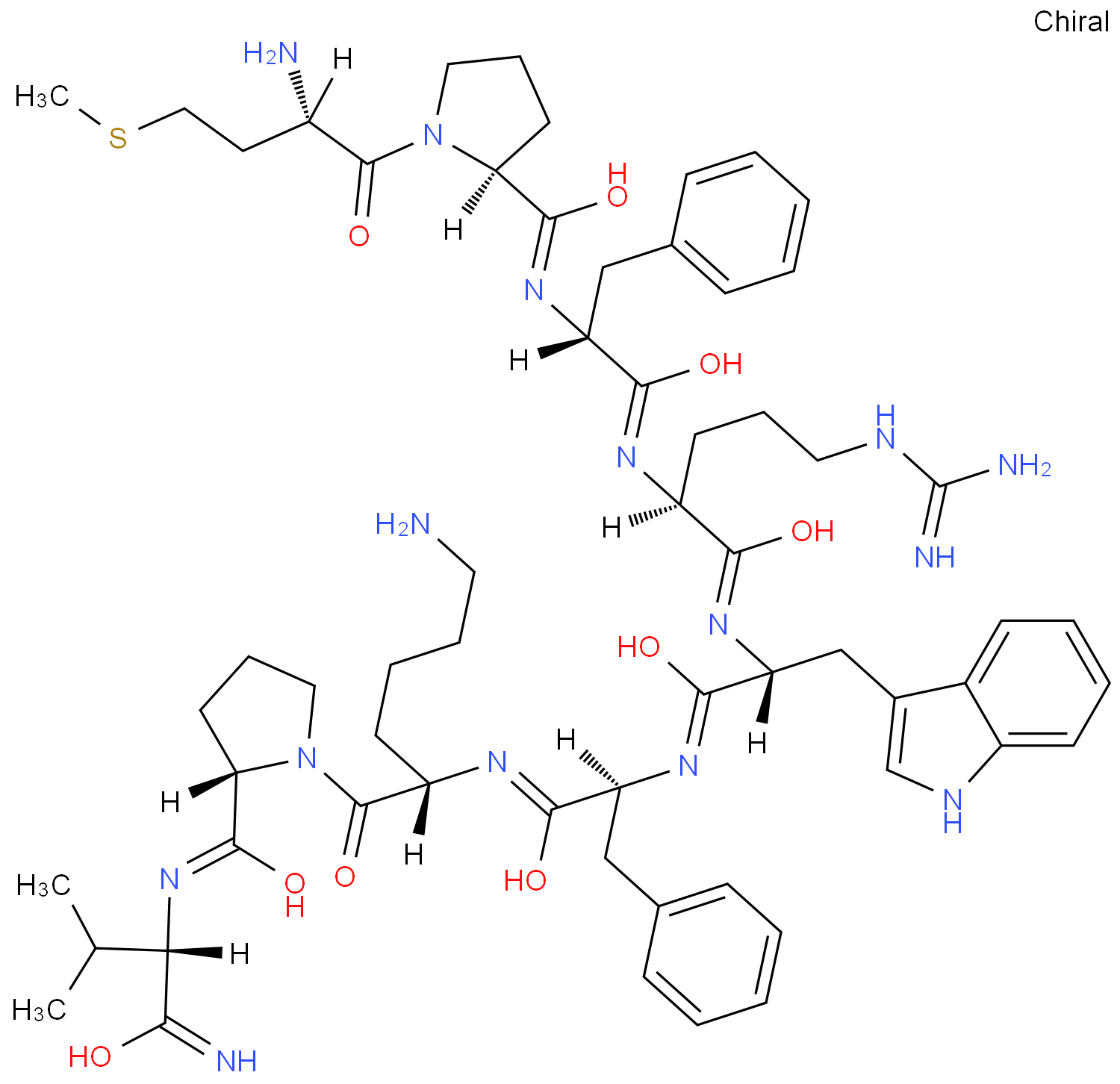
- Peptide Sequence: Met-Pro-D-Phe-Arg-D-Trp-Phe-Lys-Pro-Val-NH?
- IUPAC Name: Methionyl-L-prolyl-D-phenylalanyl-L-arginyl-D-tryptophyl-L-phenylalanyl-L-lysyl-L-prolyl-L-valinamide
- Synonyms: α-MSH antagonist nonapeptide, skin brightening depigment peptide
- Molecular Formula: C??H??N??O?S
- Molecular Weight: 1206.52 g/mol
- MDL No.: MFCD32089451


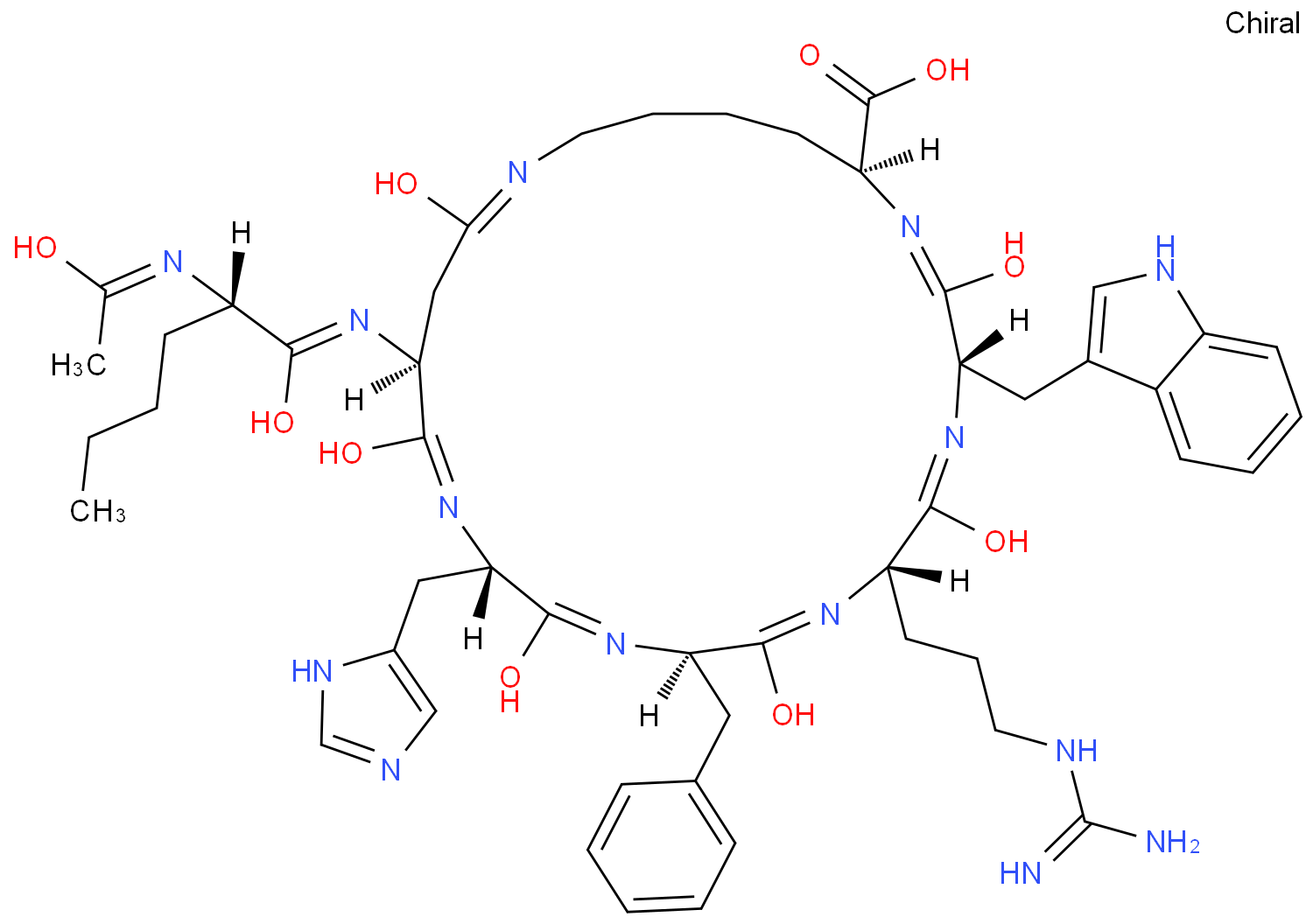
Nonapeptide-1 Chemical Structure
2. Physical & Chemical Properties
| Test Item | Standard Specification |
|---|---|
| Appearance | White to off-white lyophilized crystalline powder |
| Odor | Odorless |
| Solubility | Freely soluble in purified water, PBS buffer; soluble in glycerin & DMSO; slightly soluble in ethanol; insoluble in mineral oils, acetone |
| pH (0.1% aqueous solution) | 4.0 ~ 6.5 |
| Thermal Stability | Add below 45℃ during emulsification; avoid sustained heating above 60℃ |
| Stability | Stable under weak acid & neutral cosmetic systems; incompatible with strong alkali, high-concentration oxidants, long-term UV exposure |
| Hygroscopicity | Moderately hygroscopic, vacuum sealed storage required |
3. Quality Specifications (Cosmetic Grade)
| QC Item | Standard Limit | Test Method |
|---|---|---|
| Assay (HPLC, anhydrous basis) | ≥98.0%; Premium ≥99.0% | RP-HPLC UV 220 nm |
| Loss on Drying (KF) | ≤0.50% | Karl Fischer Titration |
| Residue on Ignition | ≤0.10% | Gravimetry |
| Single Unknown Related Impurity | ≤0.30% | HPLC |
| Total Related Impurities | ≤1.00% | HPLC |
| Free Amino Acid Residues | ≤0.10% | HPLC |
| Endotoxin | <50 EU/mg | LAL Test |
Heavy Metals
| Heavy Metal | Limit |
|---|---|
| Lead (Pb) | ≤0.5 ppm |
| Arsenic (As) | ≤1.0 ppm |
| Cadmium (Cd) | ≤0.1 ppm |
| Mercury (Hg) | ≤0.1 ppm |
Microbial Limits
| Microbe Index | Standard |
|---|---|
| Total Aerobic Microbial Count | ≤500 CFU/g |
| Yeast & Mold | ≤50 CFU/g |
| E. coli, Salmonella, S. aureus | Negative per 25g |
4. Core Biological Mechanism & Efficacy
-
Competitive MC1R Receptor Antagonist (Core Depigment Mechanism)
Biomimetic peptide that competitively binds to melanocyte MC1R receptor, blocks α-MSH signal transmission, inhibits intracellular cAMP elevation, fundamentally suppresses tyrosinase activation and melanin synthesis.
-
Gentle Brightening & Fade Hyperpigmentation
Reduces sun spots, age spots, freckles, post-inflammatory pigmentation and chloasma; evens uneven skin tone without cytotoxicity to melanocytes, milder than hydroquinone or kojic acid.
-
Inhibit Melanosome Transfer
Restrains melanosome delivery from melanocytes to keratinocytes, prevents skin darkening and dullness caused by UV irradiation.
-
Anti-Inflammatory & Anti-Oxidation Auxiliary Effect
Scavenges ROS free radicals, relieves inflammatory stress induced by ultraviolet rays, reduces inflammatory pigmentation.
-
Sensitive Skin Friendly Brightening Agent
No irritation, no photosensitivity; suitable for long-term brightening care of sensitive and fragile skin.
5. Application Fields & Recommended Dosage
5.1 Brightening & Depigmentation Skincare (Main Application)
Whitening serum, spot correction essence, brightening toner, anti-chloasma cream, post-sun repair mask
- Recommended addition: 0.001% ~ 0.08% (w/w)
5.2 Anti-Photoaging Daily Skincare
Anti-dullness lotion, UV defense repair cream, antioxidant brightening emulsion
- Recommended addition: 0.001% ~ 0.05% (w/w)
Formula Operation Tips
Optimal formulation pH: 4.0–6.0; compatible with tranexamic acid, niacinamide, vitamin C derivatives, glutathione; add at low-temperature late emulsification stage.
6. Safety Profile
- Non-irritating to facial skin and mucosa at standard cosmetic dosage
- Non-sensitizing, non-phototoxic, no contact allergy risk
- No cytotoxicity to melanocytes and keratinocytes, excellent biocompatibility
- Safe for long-term continuous use in whitening skincare series
7. Storage & Packaging
- Storage Condition: Hermetic nitrogen-filled aluminum foil vacuum bag; long-term storage at -20°C, cool dry light-proof warehouse; short-term storage ≤4°C; avoid repeated opening & high temperature exposure
- Shelf Life: 36 months under intact original vacuum packaging
- Packaging: 1g/5kg aluminum vacuum foil bags for cosmetic factories; 25kg double PE inner bag + paper drum for bulk orders